


Are You Ready for the Next Nor'easter? Choosing the Right Heat Pump
At Bobby O's HVAC Inc., when customers ask us for a Rheem vs. Bosch Heat Pumps: A Real-World Performance Review for Long Island Winters, they are usually trying to answer one critical question: is your current heating system actually ready for the next nor'easter, or are you just hoping it survives another season? When the temperature drops and the coastal winds pick up, relying on an aging unit is a gamble. Choosing between Bosch's advanced inverter technology and Rheem's traditional, rugged reliability requires looking past manufacturer spec sheets to see how these systems actually handle our specific climate.
Taking action during this pre-winter October window is crucial. Once the cold sets in permanently, our team sees emergency no-heat calls spike, and installation timelines stretch out. If you are looking for reliable heating solutions, scheduling a professional heat pump installation before the first freeze is the smartest move you can make for your home's comfort.
The Unique Challenge of Coastal New York Winters
Heating a home in coastal New York is a completely different challenge than heating a home in a dry, inland climate. Generic cold-weather ratings on a manufacturer's brochure often fail to account for the specific environmental hurdles your system will face. In our years of servicing systems across Port Jefferson Station, we have found that the primary antagonist for any outdoor HVAC unit in our region is not just the cold—it is the moisture.
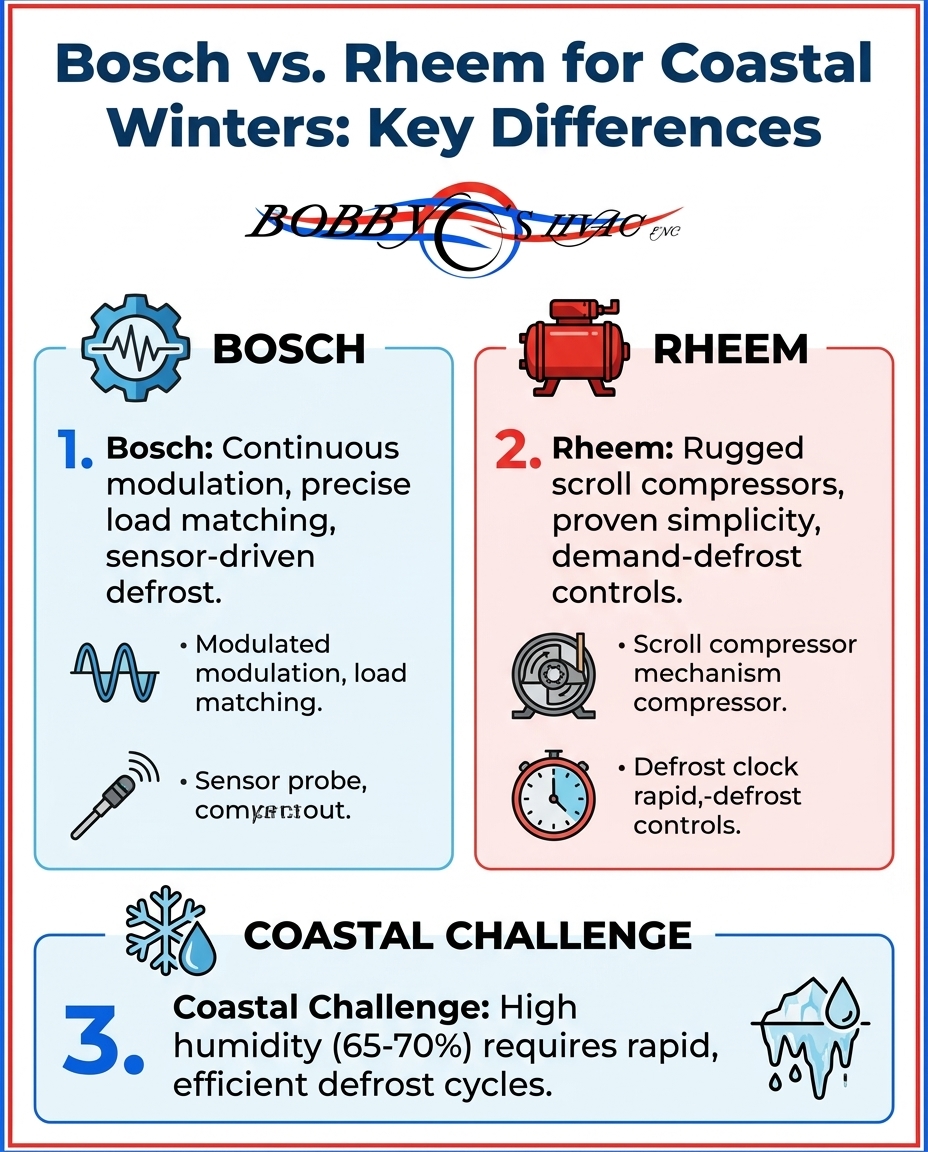
High Coastal Humidity: During the winter months, coastal areas frequently experience humidity levels averaging between 65% and 70%. When this heavy, damp air meets freezing coastal temperatures, the moisture in the air condenses and instantly freezes upon contact with your heat pump's outdoor coil.
Rapid Frost Accumulation: Because a heat pump absorbs heat from the outside air, its outdoor coil runs even colder than the ambient temperature. In our damp climate, this causes a thick layer of frost to build up rapidly on the unit. A heat pump operating in a dry 20-degree climate might run all day with minimal frost, but a unit running in a damp 35-degree coastal storm will ice over quickly.
Defrost Cycle Efficiency: When frost accumulates, it insulates the coil and blocks airflow, drastically reducing the system's ability to pull heat from the air. To combat this, the heat pump must enter a defrost cycle—temporarily reversing its operation to melt the ice. During this cycle, the system is not actively heating your home. A pattern we see often on winter service calls is that a heat pump's ability to sense frost accurately, defrost rapidly, and return to heating mode is one of the most critical factors for winter comfort in coastal New York.
Bosch Heat Pumps: Advanced Inverter Technology
Bosch has built a strong reputation around its highly advanced, energy-efficient engineering. Their approach to heating relies heavily on intelligent electronics and variable-speed operation, designed to maximize comfort while minimizing energy consumption.
The core of this technology is the Bosch Inverter Ducted Split (IDS) system. Unlike traditional heat pumps that turn on at 100% capacity and shut off when the thermostat is satisfied, Bosch units utilize continuous modulation. This means the compressor can adjust its speed in tiny increments—anywhere from 25% to 110% capacity—to match the exact heating load your home requires at any given moment.
1. Precise Load Matching: By continuously adjusting its output, a Bosch system avoids the harsh temperature swings associated with traditional on/off systems. It provides a steady, even stream of warm air.
2. Reduced Energy Spikes: Because the system rarely shuts down completely, it avoids the massive electrical draw required to start a compressor from a standstill. It simply idles up or down as needed.
3. Ultra-Quiet Operation: Running at lower speeds for longer periods means the outdoor unit is significantly quieter than a traditional system roaring to life at full capacity.
4. Complex Engineering: The tradeoff for this high efficiency is complexity. Inverter drives rely on sophisticated electronic control boards. While highly reliable, they require specialized diagnostic knowledge during maintenance, which our trained technicians are fully equipped to handle.
Understanding these features is essential if you want to optimize your home's energy usage. In fact, learning the tips to use a heat pump more efficiently can help you maximize the benefits of an inverter-driven system.
How Continuous Modulation Handles Temperature Drops
When a mild autumn afternoon transitions into a freezing winter night, a Bosch inverter system shines. As the outdoor temperature falls and your home loses heat faster, the inverter compressor smoothly ramps up its speed to compensate. There is no sudden blast of air; the system simply works a little harder to maintain the exact temperature you set. On milder days, it scales back, sipping electricity and providing gentle, continuous warmth.
Rheem Heat Pumps: Rugged Simplicity and Reliability
While Bosch focuses on continuous modulation, Rheem takes a different, equally effective approach. Rheem's design philosophy centers on proven, rugged simplicity. We often recommend their Endeavor line of heat pumps for homeowners who want a system built to withstand harsh conditions without relying on overly complex electronics that might be susceptible to extreme weather fluctuations.
Rheem systems traditionally utilize robust scroll compressors. A scroll compressor uses two spiral-shaped metal pieces—one stationary and one orbiting—to compress the refrigerant. This design has very few moving parts, making it incredibly durable and highly tolerant of the stresses caused by severe winter weather.
1. Proven Durability: The straightforward mechanical design of a Rheem unit means there are fewer delicate electronic components exposed to the elements, making it a workhorse during severe storms.
2. Accessible Maintenance: Because the technology is industry-standard and widely understood, diagnosing issues is straightforward. Replacement parts are also readily available, which is crucial if a breakdown occurs during a blizzard.
3. Consistent Performance: Rheem units are designed to deliver strong, reliable heat output, ensuring your home recovers its temperature quickly after a door is left open or the thermostat is turned up.
4. Sturdy Cabinet Design: Rheem constructs their outdoor cabinets to withstand heavy snow and debris, protecting the vital internal components from physical damage during high winds.
The Power of Demand-Defrost Controls
One of Rheem's most significant advantages in our coastal climate is its demand-defrost control system. Many standard heat pumps use a time-temperature defrost board, which automatically initiates a defrost cycle every 30, 60, or 90 minutes if the coil is below freezing—regardless of whether there is actual frost on the unit. Rheem's demand-defrost system uses advanced sensors to monitor the exact temperature difference between the outdoor coil and the ambient air. It only initiates a defrost cycle when it senses that frost is actually restricting airflow. In a damp climate, this prevents the system from wasting energy on unnecessary defrost cycles, keeping your home warmer and reducing wear on the compressor.
Head-to-Head: Bosch vs. Rheem in Freezing Conditions
When our team evaluates these two powerhouse brands for neighborhoods like Port Jefferson Station and coastal Long Island, the decision often comes down to what you prioritize: the sophisticated, quiet efficiency of Bosch or the rugged, easy-to-service reliability of Rheem. Both brands offer exceptional performance, but they handle the damp, coastal cold differently.
• Compressor Type — Bosch IDS (Inverter): Variable-speed inverter (modulates 25%-110%) — Rheem Endeavor (Traditional/Scroll): Single or two-stage robust scroll compressor
• Defrost Strategy — Bosch IDS (Inverter): Sensor-driven, highly precise defrost cycles — Rheem Endeavor (Traditional/Scroll): Demand-defrost controls (only runs when needed)
• Temperature Control — Bosch IDS (Inverter): Exact load matching; minimal temperature swings — Rheem Endeavor (Traditional/Scroll): Strong, immediate heat output upon startup
• Complexity & Repair — Bosch IDS (Inverter): Complex electronics; requires specialized diagnostics — Rheem Endeavor (Traditional/Scroll): Straightforward mechanics; parts widely available
• Best Fit For — Bosch IDS (Inverter): Homeowners prioritizing maximum efficiency and quiet operation — Rheem Endeavor (Traditional/Scroll): Homeowners prioritizing rugged durability and ease of repair
For homes that require supplemental heating in specific zones, such as a sunroom or a converted garage, pairing either of these central systems with ductless mini split options can provide targeted comfort without overloading your primary heat pump.
Defrost Cycle Performance
In the heavy, wet snow and high humidity of a nor'easter, defrost performance is paramount. Rheem's demand-defrost is incredibly effective because it prevents the unit from stopping its heating cycle prematurely. Bosch also uses intelligent sensor-driven defrost, but its variable-speed compressor can sometimes ramp up aggressively to melt thick ice, which occasionally increases operational noise momentarily. Both systems handle frost well, but Rheem's straightforward demand board is highly prized by our technicians at Bobby O's HVAC Inc. for its reliability in freezing rain.
System Longevity in Coastal Environments
Salt air, high winds, and continuous moisture take a toll on any outdoor machinery. Over a 10 to 15-year lifespan, the physical cabinet and internal coils will face significant weathering. Rheem's simpler electronic layout often means fewer specialized boards are exposed to potential moisture damage. Bosch counters this with heavily protected, coated internal components designed to shield their sophisticated inverters. From what we see in the field, regular professional maintenance is the only way to ensure either system survives a decade of coastal storms.
Navigating Your Pre-Winter System Upgrade
Replacing a heating system is a major decision that requires careful planning. Recently, a local homeowner reached out to our team at Bobby O's HVAC Inc. needing a new HVAC system and information on general energy rebates before the cold weather hit. After a thorough assessment, they received expert craftsmanship on the installation and clear guidance on available incentives, ensuring their home was ready for the season without unnecessary stress. Taking a proactive approach in the pre-winter October timeframe allows you to make an informed choice rather than a rushed emergency purchase.
Before committing to either a Bosch or Rheem system, there are several vital steps our technicians take to ensure the unit will perform correctly in your specific home:
• Professional Load Calculation: Never assume your new heat pump should be the exact same size as your old one. A professional must calculate your home's square footage, window quality, and insulation levels to determine the precise heating load required.
• Ductwork Assessment: Advanced inverter systems like Bosch rely on specific airflow parameters to achieve their high efficiency ratings. Your existing ductwork must be inspected for leaks, proper sizing, and adequate return air vents.
• Electrical Capacity Check: Upgrading to a modern heat pump may require an assessment of your home's electrical panel to ensure it can safely handle the required amperage, especially if you are transitioning away from fossil fuels.
• Incentive Verification: General energy rebates and federal tax credits may apply to qualifying high-efficiency upgrades. Always check with your utility provider or a tax professional to see what generic incentive programs you might qualify for, as these can help offset the initial investment.
If you are planning your upgrade, exploring flexible financing plans can make transitioning to a high-efficiency Bosch or a rugged Rheem system much more manageable.
Frequently Asked Questions About Upgrading Your Heat Pump
Which heat pump is best for New York winters?
The best heat pump for New York winters is one designed specifically for cold climates and high humidity. Both Bosch and Rheem offer excellent models that maintain strong heating capacity even when temperatures drop below freezing. We often recommend Bosch if you want precise temperature control and maximum energy efficiency, while Rheem is preferred if you value rugged durability and straightforward maintenance.
Do Bosch heat pumps work in freezing temperatures?
Yes, Bosch heat pumps are engineered to operate effectively in freezing temperatures. Their advanced inverter technology allows the compressor to speed up as the temperature drops, pulling latent heat from the outdoor air even when it feels bitterly cold outside. They are fully capable of keeping a home warm during standard winter conditions without relying heavily on backup heating.
How does Rheem compare to Bosch for heating?
Rheem compares very favorably to Bosch, but they achieve their heating goals differently. While Bosch uses variable-speed modulation to provide a gentle, continuous stream of heat, Rheem typically uses robust single or two-stage compressors that deliver strong, immediate warmth. Rheem's demand-defrost system also gives it a distinct advantage in clearing ice quickly during heavy, wet coastal snowstorms.
How long do Bosch and Rheem heat pumps last in coastal environments?
In a coastal environment with high humidity and salt air, a well-maintained heat pump typically lasts between 10 and 15 years. Both Bosch and Rheem build durable outdoor cabinets, but the harsh coastal elements will eventually take a toll on any mechanical system. Scheduling bi-annual professional maintenance with our team to clean the coils and check electrical connections is the only proven way to maximize the lifespan of either brand.
Is an inverter heat pump worth the investment for a Long Island home?
An inverter heat pump is often worth the investment for Long Island homes due to its superior energy efficiency and quiet operation. The ability of the system to modulate its capacity means it uses less electricity during mild fall and spring days, which can significantly lower seasonal energy usage. However, the initial installation requires a larger investment compared to a traditional single-stage system.
Secure Your Home's Winter Comfort Today
Deciding between the sophisticated efficiency of a Bosch inverter and the proven, rugged durability of a Rheem system comes down to understanding exactly what your home needs to conquer the damp, freezing weather. Reading a Rheem vs. Bosch Heat Pumps: A Real-World Performance Review for Long Island Winters is the first step, but applying that knowledge to your specific ductwork, insulation, and comfort preferences requires professional insight.
Do not wait until the first major nor'easter leaves you shivering in your living room. The pre-winter October window is the ideal time to secure your home's comfort. Schedule a comprehensive system assessment with Bobby O's HVAC Inc. today to ensure you choose the perfect heat pump designed to keep your family warm, safe, and comfortable all winter long.
Customer Testimonials
Hear directly from homeowners who trust Bobby O’s HVAC Inc. for fast response times, honest service, and lasting comfort.

I got 3 estimates for the job but only Bobby O’s knew about rebates etc. the workmanship was outstanding and Armond really knows his stuff and is a true craftsman, something that is in short supply these days.

Competitive pricing. Nice, easy, and clean installation. No problems for a long time. When there was a hiccup, the problem immediately. Highly recommend.
Our AC stopped working in the middle of the heat wave. Called the company and they were able to get a tech out the same day to get us up and running. Great service!!
Quality professional service in a timely manner. Highly experienced in the industry. Great troubleshooting skills
I’ve had a service contract with Bobby O’s for about 6 years. They are always responsive, professional and thorough.
Compressor stopped working as I am on a service plan response was same day
and all was made right
My bedrooms had no AC!
They came and quickly evaluated the problem, replaced the bad part and I soon had complete cool AC everywhere.
Rate was very reasonable!
This was a fabulous experience. Most people don't even return your call. Bobby returned call right away, and at my house the next day!!
Fixed the issue!!! And on top of it gave me a great price!!! I totally recommend him!!!
Bobby is great! He was extremely helpful and accommodating to get my heat back running again at a reasonable price. Highly recommend
I was referred to Bobby O's HVAC through a friend. They came the very next morning, assessed the problem. I chose to replace rather than repair. They were fair, efficient, neat, extremely professional and fast!